Safety
This tab is for safety incidents – fatalities, injuries, and vehicles associated with crashes – and adjustments.
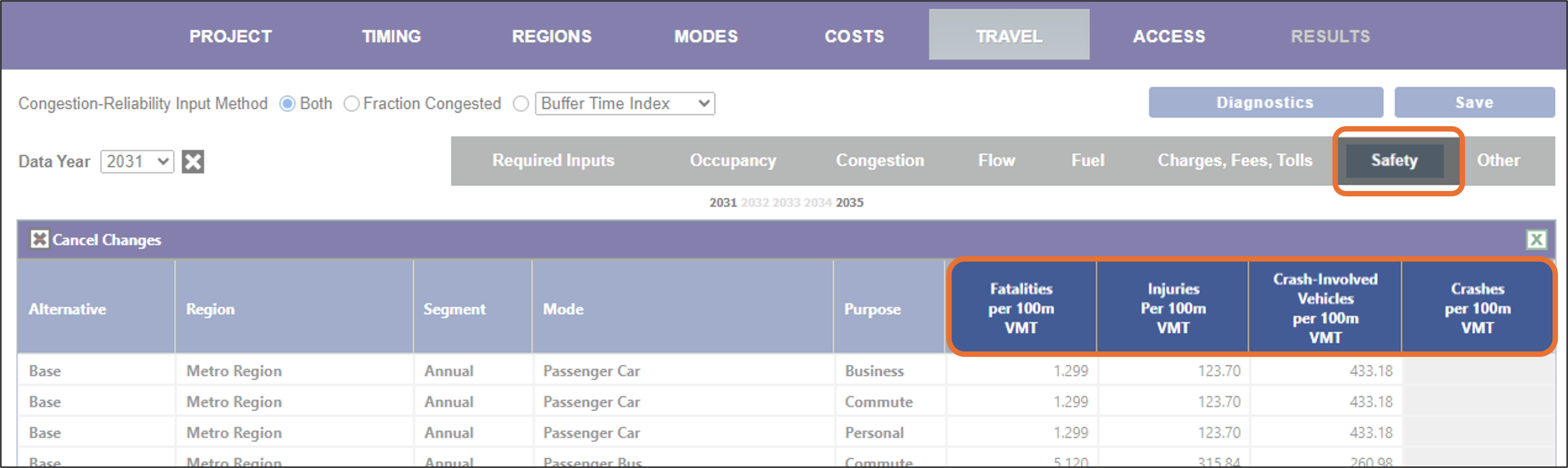
Data Fields
-
Fatalities per 100m VMT. Number of fatalities estimated for each 100 million miles traveled.
-
Injuries per 100m VMT Number of injuries of Unknown severity estimated for each 100 million miles traveled.
-
Crash-Involved Vehicles per 100m VMT. Number of vehicles damaged per 100 million vehicle miles travelled. This is only available when the Crash Entry Method (in the Preferences window) is set to Crash-Involved Vehicles.
-
Crashes per 100m VMT. Number of crashes per 100 million vehicle miles travelled. This is only available when the Crash Entry Method (in the Preferences window) is set to Crashes.
Considerations
When planning to entering safety data, consider whether you will use the rates method via the Safety tab (discussed here) or safety counts through the Safety Counts interface. Additionally, consider whether you want to get reports only on the social benefits of averted incidents or on social benefits and economic impacts. If you want to estimate economic impacts, you will need to select "Include" on the Safety Economic Impact radio buttons on the Results Settings page.
If a project adds distance traveled for both passenger car and bike/pedestrian travel, fatalities and injuries may be overestimated, since crash rates consider current average outcomes per mile. Defaults are provided for both as the modeled changes will typically be shifts between modes or within-mode analysis. The rates do not account for safety-in-numbers for non-occupants or the fact that many projects that increase bike/ped volumes will include safety improvements. When improving safety, consider using crash count inputs rather than default rates. Alternatively, crash rates can be zeroed out or reduced if increased bike/pedestrian trips should not be considered as facing increased crash risks beyond those represented by vehicular risks imposed on non-occupants.