2026-08 Well-to-Wheels Emissions
This release introduces upstream carbon dioxide emissions estimates for all fuel types supported by TREDIS. This allows users to account for emissions from the production and distribution of fuel in their TREDIS analysis to more accurately reflect the emissions produced to enable vehicle travel. Previously, TREDIS solely calculated tailpipe CO₂ emissions.
Default factors are provided for all projects – both existing and new – and are viewable and editable to enable more comprehensive analysis of transportation impacts by incorporating upstream emissions into project results, while maintaining compatibility with existing workflows that rely on tailpipe-only assumptions. This is especially important for including the upstream emissions of electricity generation for electric vehicles.
Setting the Calculation Type
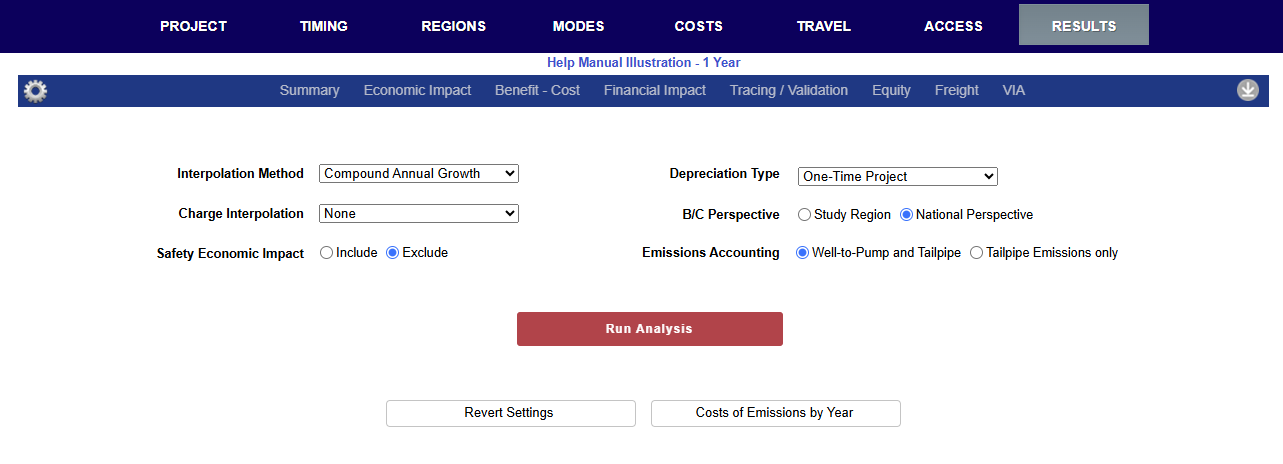
The new Results Setting to control the calculation method is labeled Emissions Accounting, with options for Tailpipe Emissions Only and Well-to-Pump and Tailpipe Emissions, where the second option will always necessarily lead to larger environmental effects since it includes a broader range of emissions sources. See Figure 1 for an illustration.
In any existing projects, Tailpipe Emissions Only will be selected, so that if the project is simply rerun it will generate the same results as before, though users may change these to Well-to-Pump and Tailpipe to capture more emissions benefits of projects.
For new projects, the Results Settings will default to the Well-to-Pump and Tailpipe selection (see Figure 1) and users can select Tailpipe Emissions Only if that is the preference for that project.
Setting the Factors
The rate of CO₂ emissions for both Well-to-Pump and Tailpipe (in pounds per unit of fuel used) are now variables on the Travel page, under the Fuel tab, as shown in Figure 2.
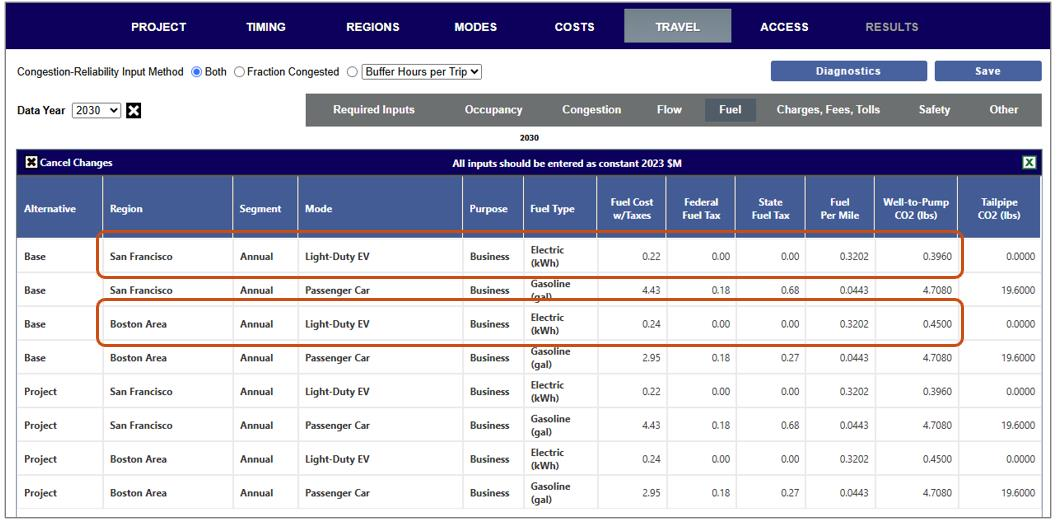
For electric modes, Well-to-Pump factor default values are specific to the state based on the mix of energy producers in the state. Tailpipe factors depend on the type of fuel and the physical carbon content released from complete combustion. Each default value can be edited manually if needed, for example if the user wants to test a different carbon intensity of electricity production for electric vehicles, test sensitivity to supply chain carbon emissions from other fuels, or use in-use carbon emissions for their fleet from modeling tools like MOVES.
Import and Export Considerations
The TREDIS Import Spreadsheet includes these new variables in the Travel worksheet. If an old format import worksheet is being used, default data for these factors will be used for those modes and regions.
The Multi-Run & Summary Results function now supports the Emissions Accounting options and documents the choice in the output file.
Default Factor Sources
Fossil fuel production and distribution emissions are specific to the different fuel types and use national data. Well-to-pump emissions per gallon of fuel for gasoline, diesel, and CNG are based on the "Well to Product" values used in Argonne National Lab's GREET model (version 1.3.0.14168).1 The emissions intensity for electricity production varies by state and values are derived from the U.S. Energy Information Administration's State Profiles.2 Carbon intensity of electricity production does not include transmission or distribution losses.